Yakitori Omakase Singapore: What to Expect from a Chef-Led Experience
Japanese yakitori is more than chicken grilled on skewers. It is a specialised cooking style that requires careful ingredient preparation, precise heat control and an understanding of different chicken cuts.
For diners exploring yakitori omakase in Singapore, this dining format offers an opportunity to experience Japanese grilling through a chef-led selection of dishes. Each skewer can introduce a different texture, flavour and preparation technique, creating a meal that goes beyond ordering individual grilled items.
At Torikami Singapore, yakitori takes centre stage through an omakase concept that highlights traditional charcoal grilling and the chef's approach to Japanese cuisine.

What Is Yakitori Omakase?
Yakitori (焼き鳥) is a traditional Japanese dish featuring chicken cut into portions, placed on skewers and grilled, commonly over charcoal. It is appreciated for its variety of chicken cuts and the techniques used to prepare each one.
Omakase (お任せ), meanwhile, means entrusting the selection of dishes to the chef. When combined, yakitori omakase allows diners to experience different yakitori preparations through a menu arranged by the chef.

Understanding Different Yakitori Cuts
One distinctive feature of Japanese yakitori is the use of different chicken parts. Each cut has its own texture and characteristics, requiring appropriate preparation and grilling.
Japanese name | Chicken cut | Characteristics |
Kashiwa | Chicken thigh | Tender texture with a balanced amount of fat |
Seseri | Chicken neck | Distinctive texture and rich flavour |
Sunagimo | Chicken gizzard | Firm and slightly chewy |
Tebasaki | Chicken wing | Combines meat and skin |
Tsukune | Chicken meatball | Ground chicken shaped into a skewer |
The selection varies between restaurants. Exploring different cuts is one of the ways diners can better understand the variety of traditional Japanese yakitori.
How Omakase Shapes the Meal
Unlike ordering individual dishes from a standard menu, an omakase experience follows a progression determined by the chef.
The selection may include different chicken cuts, vegetables and other preparations, depending on the restaurant's concept and ingredient availability.
This format allows each course to contribute to the overall meal while giving diners an opportunity to discover preparations they might not normally choose themselves.
How Japanese Yakitori Is Prepared
The preparation of yakitori involves several stages, from portioning ingredients to skewering and seasoning. Attention to these details helps create a consistent result across different ingredients.

Preparation and Skewering
Chicken is prepared according to the characteristics of each cut. The size and shape of individual portions influence how they cook, while the way ingredients are arranged on a skewer can affect their exposure to heat.
Skewering is therefore an important part of the process rather than simply a way to hold ingredients together.
Seasoning: Shio and Tare
Two familiar seasoning styles in Japanese yakitori are shio and tare.
Shio: Salt-seasoned yakitori that highlights the natural characteristics of the ingredient.
Tare: A Japanese seasoning sauce that adds savoury and sweet notes to grilled skewers.
The choice depends on the ingredients and the intended flavour profile. Both approaches allow the natural characteristics of the chicken to remain central to the dish.
Charcoal-Grilled Yakitori and the Importance of Heat
Charcoal grilling is closely associated with traditional Japanese yakitori. Unlike cooking methods that rely mainly on direct contact with a heated surface, charcoal grilling exposes ingredients to radiant heat, making temperature management an important part of the process.

What Is Binchotan Charcoal?
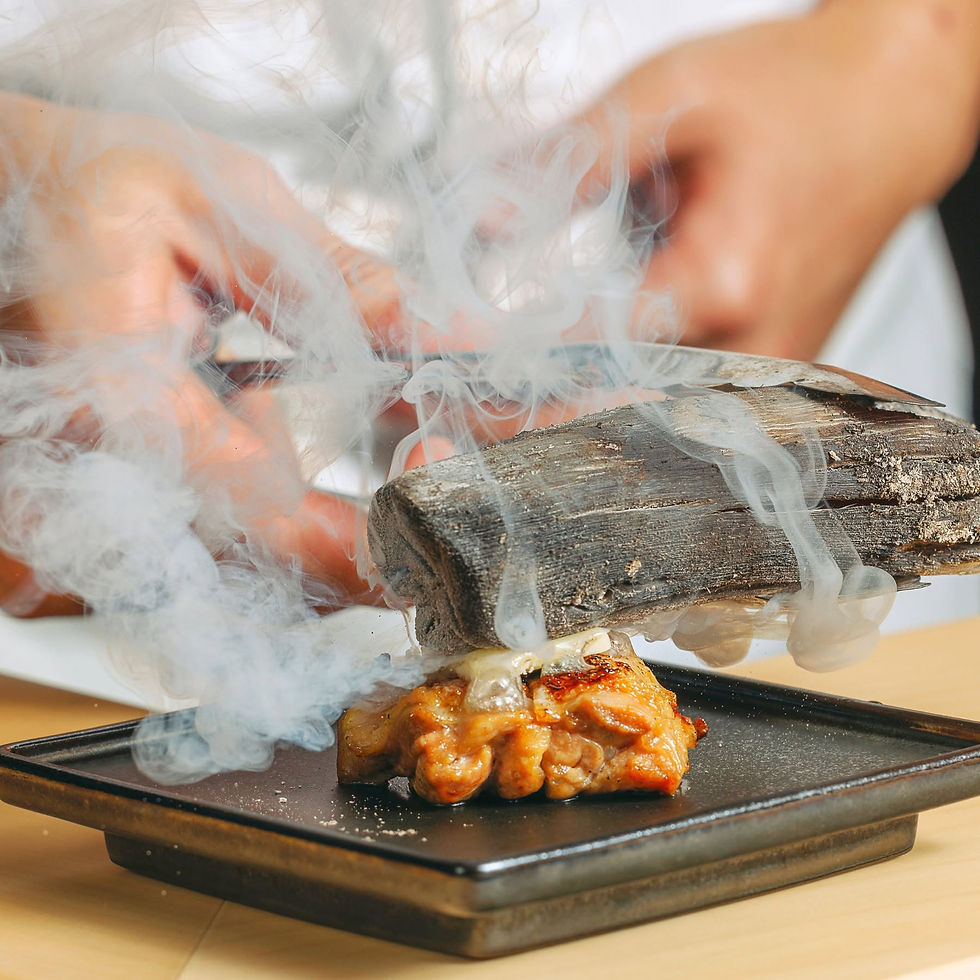
Binchotan is a traditional Japanese white charcoal known for its high density and consistent heat output. It is commonly associated with Japanese grilling because it provides a suitable heat source for carefully prepared ingredients.
At a yakitori restaurant, the charcoal is part of the cooking process, not merely a source of heat. The chef must consider the ingredient, its size and the required cooking time when working with the grill.
Why Heat Control Matters
Different chicken cuts respond differently to heat. Cuts with more fat, for example, have different cooking characteristics from leaner portions.
The chef needs to manage the grilling process carefully to achieve an appropriate balance between the exterior and interior of each skewer.
This attention to heat, timing and ingredient characteristics is one of the details that distinguishes carefully prepared yakitori from ordinary grilled chicken.
What to Expect During a Yakitori Omakase Meal
A yakitori omakase experience is centred on the chef's selection and presentation of dishes. Rather than focusing on a large number of menu choices, diners follow a sequence that introduces different ingredients and preparations.

A Progression of Different Skewers
The meal may feature several chicken cuts, allowing diners to compare their textures and flavours. Depending on the restaurant's menu, vegetables and other accompanying dishes may also be included.
The progression is determined by the chef and may change according to ingredient availability.
An Intimate Counter Dining Experience
Counter seating is a familiar feature of specialised Japanese restaurants. It allows diners to observe the chef's preparation and gain a closer understanding of the techniques behind each dish.
This setting also makes the dining experience more interactive, as guests can appreciate the relationship between preparation, grilling and presentation.
Experience Yakitori Omakase at Torikami Singapore
For those looking for authentic yakitori in Singapore, Torikami offers a specialised omakase concept focused on Japanese charcoal grilling.
Located on Duxton Road, the restaurant highlights selected chicken cuts, vegetables and the use of Binchotan charcoal.

Torikami's Approach to Japanese Yakitori
Torikami's published concept reflects an emphasis on traditional Japanese yakitori techniques. The restaurant also highlights its owner's training at a yakitori restaurant in Tokyo.
Its omakase menu features a selection of chicken preparations and grilled ingredients, with the exact selection subject to change.
The focus on individual cuts and charcoal grilling gives diners an opportunity to explore different aspects of Japanese yakitori within one meal.
Visit Torikami in Singapore
Torikami Singapore
Address: 34/35 Duxton Road, Singapore 089498
Telephone: +65 9022 1423
Official website: https://www.sgtorikami.com/
For the latest menu and reservation information, guests should consult the restaurant's official website before visiting.
Frequently Asked Questions About Yakitori Omakase in Singapore
What is yakitori omakase?
Yakitori omakase is a chef-led dining experience featuring a selection of Japanese grilled chicken skewers and accompanying dishes chosen by the chef.
What is the difference between yakitori and grilled chicken?
Yakitori is a traditional Japanese preparation involving chicken cut into portions, skewered and grilled. It places particular attention on different chicken cuts, seasoning and grilling techniques.
What is Binchotan charcoal used for?
Binchotan is a traditional Japanese white charcoal used as a heat source for grilling. It is valued for its high density and consistent heat.
What should I expect at a yakitori omakase restaurant?
Diners can expect a chef-selected progression of dishes, different chicken cuts and carefully prepared grilled ingredients. At counter-style restaurants, guests may also observe the chef's preparation.
Where can I experience yakitori omakase in Singapore?
Torikami Singapore offers a specialised yakitori omakase concept at 34/35 Duxton Road, Singapore 089498. Check its official website for current dining and reservation details.
Discover Japanese Yakitori at Torikami
Yakitori demonstrates how traditional Japanese cooking can bring depth to seemingly simple ingredients. Through careful preparation, seasoning and charcoal grilling, different chicken cuts become part of a varied culinary experience.
At Torikami Singapore, the omakase format brings these elements together through chef-led preparation and traditional grilling techniques, offering diners another way to explore Japanese cuisine.

Contact for Reservations:
Address: 34/35 Duxton Road, Singapore
Phone: +65 9022 1423
Facebook: TORIKAMI SINGAPORE
Instagram: TORIKAMI SINGAPORE


Comments