Yakitori Omakase Singapore – Exploring the Art of Japanese Grilled Chicken
Yakitori omakase Singapore offers a distinctive way to experience Japanese grilled cuisine, combining carefully prepared chicken skewers with the chef’s knowledge of ingredients, seasoning and charcoal grilling. Rather than ordering each dish individually, diners follow a curated sequence that highlights different cuts, textures and flavours. For those exploring premium Japanese dining, yakitori omakase brings together craftsmanship and the simplicity of cooking over fire.
What Is Yakitori Omakase?
Yakitori is a Japanese dish featuring bite-sized pieces of chicken grilled on skewers, traditionally over charcoal. The seasoning is often simple, allowing the natural flavour of the chicken to stand out. Common options include salt, known as shio, and a sweet-savoury soy-based glaze called tare.
Omakase means entrusting the selection to the chef. In a yakitori tasting course, the chef determines the sequence of dishes, creating a progression of flavours and textures throughout the meal.
This approach gives diners the opportunity to explore yakitori beyond familiar chicken skewers. Each serving can showcase a different cut, grilling technique or seasoning, making the experience particularly appealing to those who appreciate the details of Japanese cuisine.

How Yakitori Omakase Differs From Traditional Yakitori Dining
Traditional yakitori dining often involves ordering individual skewers from a menu and sharing several dishes at the table. It is a relaxed format that allows diners to choose their favourite cuts and adjust their order throughout the meal.
By comparison, yakitori omakase follows a more curated structure. The chef selects the dishes and determines their order, considering how the flavours and textures work together. Diners can discover cuts they might not normally choose while gaining a better understanding of the craft behind each skewer.
For guests searching for premium yakitori Singapore, this format offers a more focused dining experience. The emphasis is not simply on the number of skewers served, but on the preparation, cooking technique and balance of the overall course.
Understanding Different Yakitori Cuts
One of the defining features of yakitori is the variety of chicken cuts used. Each has its own texture, richness and flavour, giving the chef different ways to create contrast throughout a tasting course.
Some familiar examples include:
Momo: Chicken thigh, appreciated for its tender texture and rich flavour.
Negima: Chicken paired with Japanese leek, combining savoury meat with the sweetness of grilled vegetables.
Tsukune: Seasoned minced chicken shaped into a skewer, often served with tare.
Tebasaki: Chicken wing, known for its distinctive texture and flavour when grilled.
Bonjiri: Chicken tail, valued for its rich, fatty texture.
Availability varies by restaurant and season. In an omakase setting, the selection may introduce diners to several cuts in a sequence designed to showcase their differences.
Understanding these variations makes a Torikami yakitori omakase experience more engaging, as diners can appreciate how the same ingredient offers different flavours depending on the cut and cooking method.

The Role of Charcoal and Binchotan in Yakitori
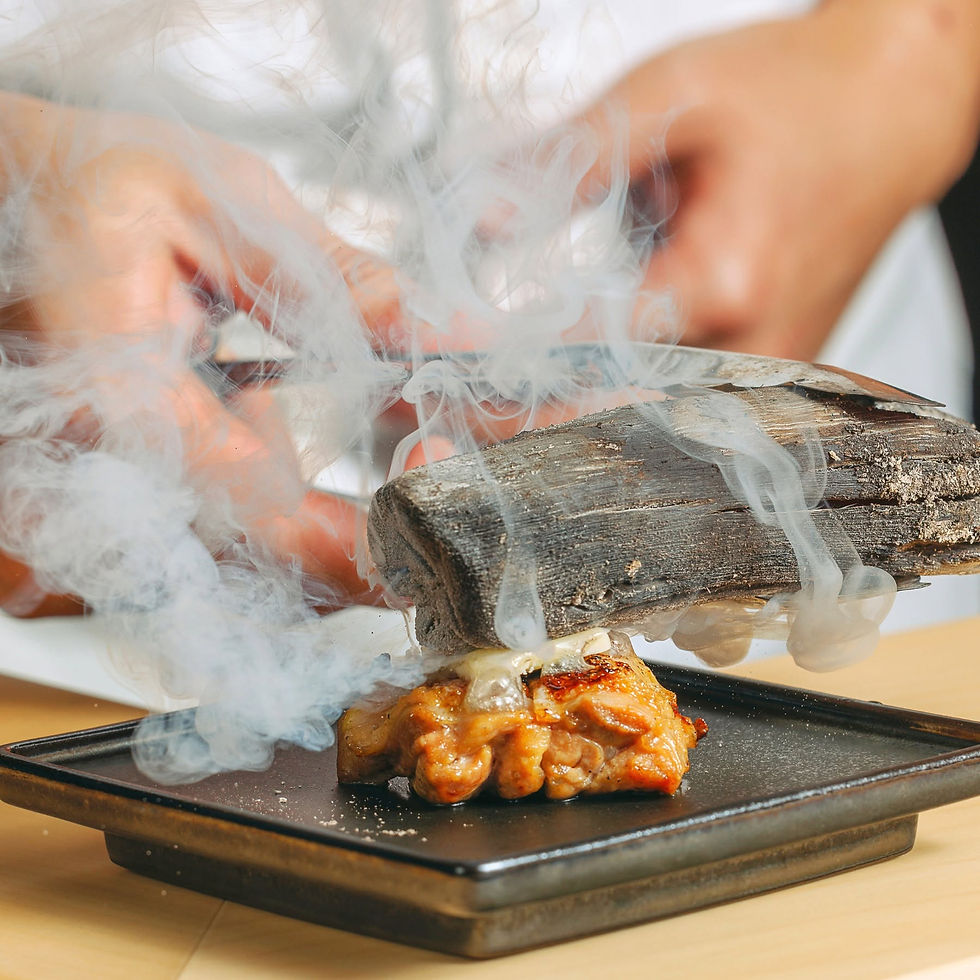
Charcoal grilling is central to traditional yakitori preparation. The heat from the charcoal helps cook the chicken while creating a lightly charred exterior and retaining moisture when the timing and temperature are carefully controlled.
Binchotan yakitori Singapore is a particularly relevant search for diners interested in Japanese grilling techniques. Binchotan is a high-quality Japanese charcoal known for its clean-burning properties and steady heat. It is valued in yakitori cooking because it can support precise grilling and help develop the characteristic aroma associated with charcoal-cooked food.
The result depends on more than the fuel itself. The chef must manage the distance between the skewers and the heat, turn each piece at the right moment and apply seasoning carefully. Small adjustments can influence the final texture, juiciness and degree of browning.
This balance of heat, timing and technique is a key part of what distinguishes carefully prepared yakitori from ordinary grilled chicken.

What to Expect From a Yakitori Omakase Experience
A yakitori omakase meal is designed around discovery. Instead of choosing every dish in advance, diners experience a sequence selected by the chef, with each course contributing something different to the meal.
The experience may include a variety of chicken cuts, seasonal accompaniments and different seasoning styles, depending on the restaurant’s menu. Some skewers may highlight the natural flavour of the meat with salt, while others use tare to introduce sweetness and depth.
For first-time diners, the best approach is to enjoy each skewer as it arrives and notice the differences in texture, aroma and seasoning. Asking the chef or service team about unfamiliar cuts can also make the meal more informative.
If you are exploring best yakitori Singapore options, consider the quality of the grilling, the variety of cuts and the overall dining experience rather than relying on the menu alone.
At Torikami Singapore, yakitori provides an opportunity to explore a distinctive side of Japanese cuisine. For diners interested in premium yakitori Singapore and the craft behind Japanese grilled chicken, it is worth learning more about the available dining experience and menu before making a reservation.
Yakitori omakase demonstrates how a seemingly simple dish can become a carefully considered culinary experience. Through the selection of chicken cuts, precise charcoal grilling and thoughtful sequencing, each skewer contributes to a deeper appreciation of Japanese food culture.
Contact for Reservations:
Address: 34/35 Duxton Road, Singapore
Phone: +65 9022 1423
Facebook: TORIKAMI SINGAPORE
Instagram: TORIKAMI SINGAPORE


Comments