Omakase Singapore Price – How Much Does It Cost and Is It Worth It?
If you are searching for omakase Singapore price, you will quickly find that the cost can vary considerably from one restaurant to another. Omakase is not simply a fixed set of dishes, but a dining experience where the chef curates a course based on ingredients, seasonality and the restaurant’s concept.
For first-time diners, understanding the typical omakase cost Singapore, what is included in a course and what makes one experience more expensive than another can make it much easier to choose the right restaurant.
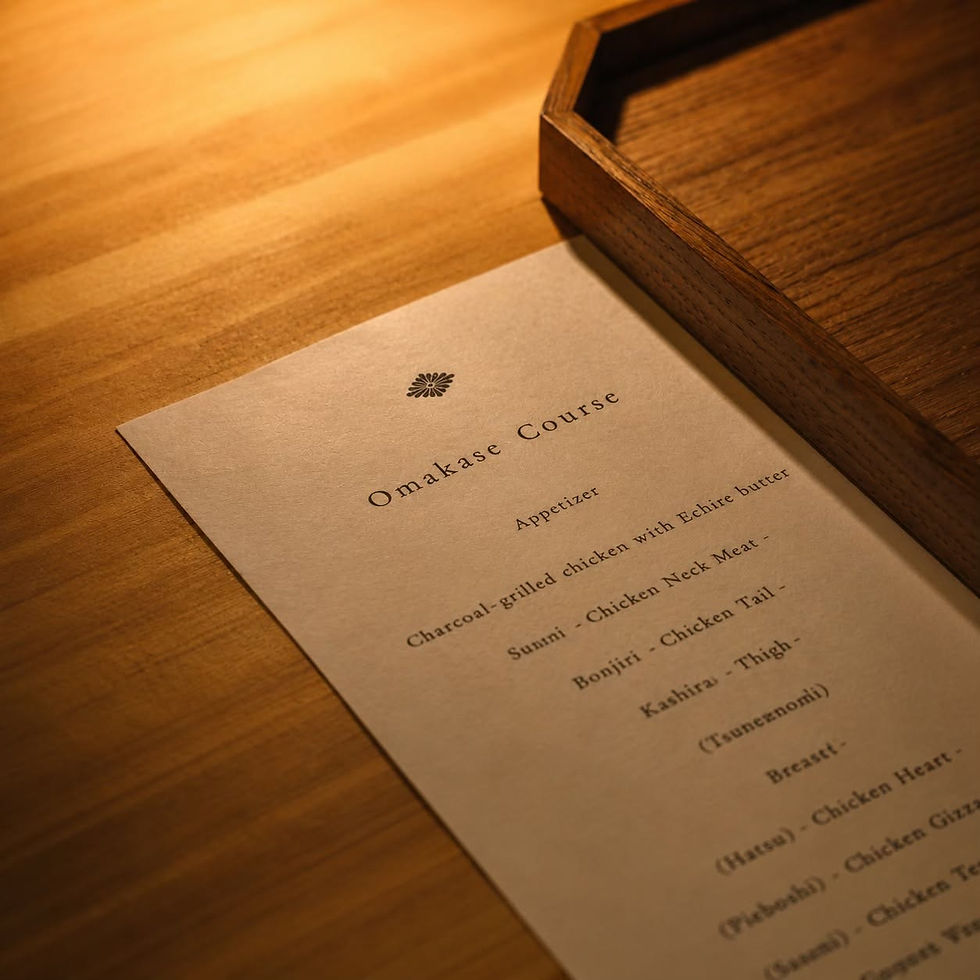
At Torikami, the focus is on Japanese yakitori omakase, bringing together charcoal-grilled chicken, seasonal ingredients and chef-led preparation in an intimate Japanese dining setting.

1. What Determines Omakase Pricing?
The price of an omakase experience is influenced by much more than the number of dishes served. Understanding these factors can help you compare different restaurants more fairly instead of looking at the menu price alone.
Ingredients and Seasonality
Premium ingredients naturally have a significant impact on the final price of an omakase course. Restaurants may feature seasonal seafood, premium cuts of meat, specialty produce or carefully selected Japanese ingredients depending on availability.
Seasonality is particularly important in Japanese cuisine. Instead of offering exactly the same menu throughout the year, chefs may adjust individual courses according to what is at its best.
Chef's Expertise and Preparation
Omakase means placing your dining experience in the chef's hands. The chef decides the progression of the meal, preparation methods and how individual dishes work together.
For yakitori omakase, this can involve selecting different cuts of chicken and grilling each piece over charcoal according to its texture, fat content and ideal cooking point.
The skill involved in preparation is therefore an important part of what you are paying for.
Restaurant Concept and Dining Environment
Location, restaurant design, seating capacity and service style can also influence omakase Singapore price.
A highly intimate restaurant with limited seating may provide a more personalised experience, while a larger Japanese restaurant may offer a different atmosphere and pricing structure.
Number and Variety of Courses
An omakase course can range from a relatively focused experience to an extensive multi-course dinner.
A longer course may include appetisers, grilled dishes, seasonal items, rice or noodles and dessert, while a more specialised concept may concentrate heavily on one particular style of Japanese cuisine.
2. Price Range in Singapore
When researching omakase cost Singapore, it is important to compare restaurants within the same category. A sushi omakase, yakitori omakase and premium kaiseki experience can have very different pricing despite all being described as "omakase."

What Is a Typical Omakase Price?
In Singapore, omakase experiences can range from more accessible options to premium dining experiences costing several hundred Singapore dollars per person. The price usually reflects factors such as:
Type and quality of ingredients
Number of courses
Restaurant concept
Chef's experience
Location
Beverage pairing options
Level of service
Dining atmosphere
Rather than choosing purely based on the lowest price, consider what is included in the course and whether it matches the experience you are looking for.
Yakitori Omakase Can Offer a Different Experience
Yakitori omakase is particularly interesting for diners who want to explore Japanese cuisine beyond sushi and sashimi.
Instead of making raw seafood the centrepiece, the experience revolves around carefully prepared chicken cuts, vegetables and other dishes, with charcoal grilling playing a central role.
At Torikami, this approach allows guests to experience yakitori through a more refined, chef-led format while still retaining the warmth and character of Japanese dining.
3. What You Get in an Omakase Course
Knowing what to expect can make your first omakase experience much more enjoyable. While every restaurant has its own menu structure, an omakase course generally follows a carefully considered progression.

Appetisers and Seasonal Dishes
The meal may begin with smaller dishes designed to introduce the chef's style and prepare your palate for the courses that follow.
These dishes can also change according to the season, giving returning guests an opportunity to experience something different.
Signature Yakitori
For a yakitori omakase, grilled skewers are naturally the highlight of the experience.
Different chicken cuts can offer noticeably different textures and flavours. Some are leaner and delicate, while others have a richer flavour and more pronounced texture.
The chef controls the grilling time and heat carefully, allowing each skewer to be served at its ideal point.
Vegetable and Supporting Dishes
Vegetables and seasonal ingredients can provide contrast throughout the meal, balancing richer grilled dishes and adding variety to the course.
This progression is one of the reasons an omakase experience can feel very different from simply ordering several skewers from an à la carte menu.
Rice, Soup or Final Course
Depending on the restaurant and selected menu, an omakase may conclude with a rice-based dish, soup, noodle dish or dessert.
The final courses are designed to bring the meal to a satisfying close rather than simply adding more food.
4. Comparing Omakase vs À La Carte
If you are deciding whether omakase is right for you, comparing it with à la carte dining is one of the easiest ways to understand the difference in value.

Omakase: A Curated Dining Experience
With omakase, you are essentially allowing the chef to design the meal for you.
Instead of deciding which individual dishes to order, you experience a sequence created around ingredients, preparation techniques and flavour progression.
This can be particularly appealing if:
You enjoy discovering new dishes.
You want to experience the chef's specialties.
You prefer a structured dining experience.
You are celebrating a special occasion.
You want to explore Japanese cuisine in greater depth.

À La Carte: More Flexibility
À la carte dining gives you greater control over what and how much you order.
It can be a better option when you already know your favourite dishes, have a specific budget or simply want to enjoy a casual meal with friends.
For example, a group might order several yakitori skewers, sides and drinks according to individual preferences.

So, Is Omakase Worth It?
The answer to is omakase worth it depends largely on what you expect from the meal.
If you are paying only for the amount of food, à la carte may sometimes appear more economical. However, omakase offers something different: a curated sequence, chef expertise, ingredient selection and an overall dining experience.
For diners who appreciate Japanese culinary techniques and enjoy trying dishes selected by a chef, the additional cost can be worthwhile.
The key is to choose an omakase that matches your interests and budget rather than assuming that the most expensive option will automatically be the best one.

5. Tips Before Booking
Once you have narrowed down your choices, a few simple checks can help you choose an omakase experience that suits your expectations.
Check the Exact Menu and Price
Before booking, look at what the advertised price actually includes. Some restaurants may list the food-only price, while beverages, service charges or GST may be calculated separately.
Checking the final pricing structure helps avoid surprises when the bill arrives.
Consider the Type of Omakase
Not every omakase experience is the same.
If you enjoy sushi, a sushi-focused omakase may be the natural choice. If you prefer grilled dishes and want to explore different cuts of chicken, yakitori omakase may offer a more suitable experience.
Check the Duration
Omakase is generally designed to be enjoyed at a slower pace than a quick meal. If you are planning a dinner around other activities, consider how long the full course is expected to take.
Tell the Restaurant About Dietary Restrictions
If you have allergies or ingredients you cannot eat, communicate this when making your reservation. Because the chef determines the course, advance notice is especially important for omakase dining.
Choose the Experience, Not Just the Price
Ultimately, searching for the best omakase Singapore price is not simply about finding the cheapest menu.
Consider the ingredients, concept, chef's approach, number of courses and atmosphere together. A well-designed omakase experience should give you a clear sense of what makes the restaurant distinctive.
Experience Yakitori Omakase at Torikami Singapore
For diners looking beyond traditional sushi omakase, Torikami offers a different interpretation of Japanese chef-led dining through yakitori.
Located on Duxton Road, Torikami brings together Japanese yakitori, charcoal grilling and an intimate dining experience. Each skewer is prepared with attention to the characteristics of individual ingredients, allowing guests to discover the different textures and flavours of Japanese grilled chicken.
The experience is particularly suited to diners searching for yakitori omakase Singapore, omakase Japanese Singapore or a more refined yakitori fine dining experience.
Whether you are planning a special dinner, a date or simply want to explore a different side of Japanese cuisine, Torikami offers an opportunity to experience yakitori through the omakase format.
Planning your next Japanese dining experience in Singapore? Discover Torikami and experience yakitori omakase in the heart of Duxton.
Contact for Reservations:
Address: 34/35 Duxton Road, Singapore
Phone: +65 9022 1423
Facebook: TORIKAMI SINGAPORE
Instagram: TORIKAMI SINGAPORE


Comments